
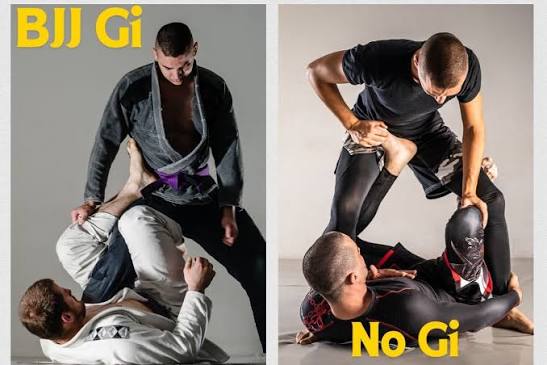
Starting Brazilian jiu-jitsu can feel exciting and a little confusing, especially when you discover that there are two main training styles: Gi and No-Gi. Both teach the core principles of Brazilian jiu-jitsu, including positioning, leverage, control, escapes, takedowns, and submissions. The biggest difference is the clothing used during training and how that clothing affects grips, movement, and certain techniques. For someone searching for Brazilian jiu-jitsu near me, understanding this difference can make it easier to choose a class that feels comfortable and supports long-term progress. At Martial Arts Advantage, learning the basics and building confidence are important parts of developing a strong martial arts foundation.
The good news is that beginners do not have to make a perfect choice on day one. Gi and No-Gi BJJ can both provide excellent physical training, practical grappling skills, and valuable lessons in discipline and problem-solving. Your best option may depend on your goals, training preferences, schedule, and the type of Brazilian jiu-jitsu classes available at your local academy. By understanding how Gi and No-Gi compare, you can walk into your first BJJ class with a clearer idea of what to expect.
What Is Gi Brazilian Jiu-Jitsu?
Gi Brazilian jiu-jitsu is practiced while wearing a traditional martial arts uniform called a Gi. The uniform usually includes a jacket, pants, and a belt that represents the student’s rank. During training, practitioners can use the Gi fabric to establish grips and control an opponent. This creates additional technical possibilities because a BJJ practitioner can hold areas such as the sleeves, collar, or lapel. Gi training often places strong emphasis on grip fighting, positional control, timing, and using leverage efficiently rather than relying only on physical strength.
For beginners, Gi BJJ can be a useful way to learn fundamental grappling concepts. The slower pace that sometimes develops from Gi grips can give new students more time to understand body positioning and movement. However, Gi training can also feel challenging at first because there are many techniques and grip variations to learn. A beginner attending a Brazilian jiu-jitsu near me class should not worry about knowing these techniques in advance. A good instructor will introduce movements gradually and help students understand why each position and grip matters.
What Is No-Gi Brazilian Jiu-Jitsu?
No-Gi BJJ is practiced without the traditional uniform. Students generally wear athletic clothing designed for grappling, such as a rash guard and shorts or other appropriate training gear. Because there is no Gi fabric to grab, practitioners must rely more heavily on controlling the opponent’s body directly. Common controls involve the wrists, arms, legs, head, and torso. This changes the way certain takedowns, escapes, passes, and submissions are performed, making No-Gi a fast-moving and highly technical form of grappling.
Many beginners enjoy No-Gi because the training environment can feel similar to other modern grappling sports. Movement may be quicker because there is no heavy uniform that can be used for gripping or controlling an opponent. No-Gi also develops skills such as hand fighting, body control, wrestling-style takedowns, and positional transitions. If you are comparing Brazilian jiu-jitsu near me options, checking whether an academy offers beginner-friendly No-Gi classes can help you find a training schedule that matches your interests. As with Gi BJJ, the focus should remain on learning safely, developing technique, and improving step by step.
Gi vs. No-Gi BJJ: Key Differences for Beginners
The biggest difference between Gi and No-Gi BJJ is the way practitioners control each other. Gi training provides more opportunities to use clothing grips, which can slow certain exchanges and create unique defensive and offensive techniques. No-Gi removes those grips and places greater emphasis on direct body control. The difference can affect the pace of training, the types of techniques commonly practiced, and how students approach each position. Neither style is automatically better because each develops useful grappling skills in a slightly different way.
Another important difference is the learning experience. Some beginners enjoy the structured grip-based approach of Gi BJJ, while others prefer the faster movement associated with No-Gi. Gi training can teach students a great deal about friction, grips, posture, and precise control. No-Gi can encourage quick transitions, hand fighting, wrestling concepts, and movement. Both styles develop balance, coordination, body awareness, patience, and problem-solving. When choosing a Brazilian jiu-jitsu near me academy, beginners should consider the quality of instruction, training environment, beginner programs, and safety standards rather than choosing a style based only on which one appears more popular.
Which BJJ Style Should Beginners Choose?
There is no universal answer to whether Gi or No-Gi is better for every beginner. Your goals should guide your decision. If you enjoy traditional martial arts, detailed grip work, and a slower technical exchange, Gi BJJ may be an excellent starting point. If you prefer faster transitions, wrestling-style movement, and modern grappling competition, No-Gi may be more appealing. Some students eventually train both because the skills learned in one format can improve performance in the other. Cross-training can also give students a broader understanding of Brazilian jiu-jitsu and grappling fundamentals.
The academy you choose can be just as important as the format you select. When searching for Brazilian jiu-jitsu near me, look for a school that offers clear instruction, beginner classes, respectful training partners, and an environment where students can learn without unnecessary pressure. A strong BJJ academy should teach proper technique while emphasizing controlled training and good training habits. Beginners should feel comfortable asking questions and learning at a reasonable pace. Martial Arts Advantage supports the idea that martial arts training is about consistent development, practical knowledge, confidence, and personal growth rather than trying to master everything immediately.
Conclusion
Gi and No-Gi BJJ both offer valuable paths for beginners who want to learn Brazilian jiu-jitsu. Gi training introduces clothing-based grips and creates many technical opportunities involving collars, sleeves, and lapels. No-Gi focuses more on direct body control, movement, wrestling concepts, and quick transitions. Both styles can improve coordination, fitness, discipline, problem-solving, and grappling ability. The right choice depends on your personal interests and the type of training environment where you feel motivated to keep learning.
If you are currently searching for Brazilian jiu-jitsu near me, focus on finding a reputable academy with experienced instructors and a welcoming beginner program. You can always try both Gi and No-Gi classes before deciding which format you enjoy most. Over time, consistent practice matters far more than choosing the “perfect” style at the beginning. With patient instruction and regular training, either format can provide a strong foundation in Brazilian jiu-jitsu while helping you develop skills that continue to grow with experience.
