
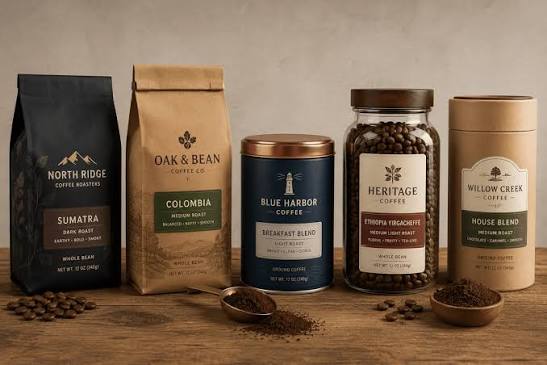
A promising export order can turn awkward fast once the coffee, capsule, artwork, carton, and sales channel stop describing the same product. Roasters may approve a blend while a distributor expects another language panel; meanwhile, a design agency may finish a pack before operations has confirmed the lid and case route. Those are not cosmetic disagreements. They create stock that cannot move cleanly from factory to customer.
Cross-border growth works best when packaging is treated as a commercial control point. The useful question is not “does the pack look ready?” but “can every party identify the same product, for the same destination market, at every handoff?” A named Cross-Border Capsule Launch Map gives that question a working home. It connects destination market choices, capsule format evidence, packing ownership, and controlled release decisions before money is committed to printed material or production time.
Begin with the Route a Customer Will Actually Experience
Picture two launches. One brand ships full cases to a retailer’s regional warehouse. Another sends small subscription orders from a fulfilment partner to individual homes. Both sell coffee capsules, yet the package faces different handling, information, and replenishment demands. Shared artwork does not erase that difference.
Commercial teams should first write down the intended route: importer or seller of record, receiving point, storage party, sales channel, final delivery pattern, and owner for local review. That small exercise often exposes a missing decision. Distributors may control a local label requirement; retailers may require a case code; direct sellers may need the consumer pack to tolerate an extra shipment. No packaging decision has meaning until its route is stated.
For each destination market, keep one short product record rather than a scattered chain of emails. Include the product name, coffee version, capsule format, pack count, language files, expected sales route, and the people allowed to approve a change. Later, when a buyer requests a different pack size or import detail, the team has somewhere to compare the request against the original launch promise.
Use the Cross-Border Capsule Launch Map to Expose Handoffs
The Cross-Border Capsule Launch Map is not a legal checklist and it is not a machine specification. It is a decision sheet that shows where one department’s choice becomes another department’s constraint. Product selects the coffee and capsule format. Design turns approved information into artwork. Procurement confirms materials. Operations prepares the filling and packing route. Logistics accepts the outbound unit. Commercial staff releases only the version that those owners recognize.
Cross-Border Capsule Launch Map: the decisions that must travel together
| Decision point | Owner’s question | Release evidence |
| Destination market | Who imports, stores, sells, and answers local questions? | Named route owner and confirmed review path. |
| Capsule format | Which cup, lid, coffee, and consumer pack are being produced? | Approved samples and a frozen material description. |
| Factory handoff | What will be filled, sealed, checked, packed, and supplied by whom? | Written scope and trial observations for open interfaces. |
| Controlled release | Which approved version may be printed, packed, and shipped? | Version record, release owner, and destination-specific file set. |
One map row should describe one dependency, not an ambition. “Export-ready packaging” hides too much. “French-language artwork for the nominated Canadian retail route, matched to the selected capsule format and carton label” gives the next person something they can check. Short, exact descriptions prevent a change from appearing harmless merely because it was requested by a different team.
Lock the Capsule Format Before Artwork Gains Momentum
Capsule format is a product decision with factory consequences. Cup geometry, lid material, coffee dose range, sealing approach, and downstream packing all depend on it. Brands that leave the format open while approving print layouts may later find that the finished graphics, case dimensions, or supplier brief no longer match the chosen product.
AFPAK presents a Nespresso-family filling and sealing page, which is a useful reminder that equipment conversations are format-specific. Its published 0.2g filling-accuracy figure applies to that Nespresso-family product cluster; it is not a universal result for another capsule, coffee, material, or factory. Brands can use the figure as a prompt to define their own acceptable fill evidence and trial conditions, not as an export promise.
Bring representative cups, lids, coffee, and the intended consumer pack into the same briefing conversation. Agreement among those items is what makes a capsule format real. If a local market needs a different material, language panel, or pack arrangement, record that as a deliberate variant on the Cross-Border Capsule Launch Map instead of allowing an informal substitution to slip into production.
Translate Product Facts into a Destination-Market File
Artwork should start from approved product facts, not from whatever information was available during an early creative meeting. Build a destination-market file containing the current product name, ingredient and claim inputs supplied by the responsible team, selected language version, importer or seller details where applicable, case identifiers, and any retailer-specific fields. Ask the person responsible for local compliance to confirm what needs review; a machinery supplier cannot make that confirmation for a food product in a particular market.
Version discipline matters more than a large spreadsheet. Give every pack file a product reference, destination market, capsule format, revision, and release status. Then connect it to its carton and order-data record. Changes to a marketing statement, origin claim, or importer detail should trigger a visible review of related material rather than a quiet replacement of one PDF.
Small brands often learn this through a painful first shipment: the product itself is correct, but the receiving partner cannot reconcile a carton label with the consumer pack or accompanying paperwork. Controlled release is the cure. It makes the final check a comparison among named records, not a memory test conducted under a departure deadline.
Make Packing and Logistics Part of the Product Brief
After the capsule leaves the filler, it still has to survive the route it was sold for. Retail cases may be opened and replenished repeatedly. Subscription parcels may meet sorting equipment, a delivery vehicle, and a consumer’s doorstep. Packaging choices therefore deserve a handling review that looks beyond the primary pack.
Run a practical sample walk. Follow the agreed capsule format through sealing, consumer packing, case packing, pallet or outbound preparation, receiving, and opening. Watch for crushed corners, loose packs, unclear orientation, mismatched labels, and handoffs where nobody knows which version is current. Even a short review can reveal whether the problem belongs to the carton, the packing method, the label process, or the chosen sales route.
AFPAK’s K-Cup-family material lists 40–600 cups per minute, ±0.1g filling accuracy, under 1% residual oxygen, and a 30-minute changeover for documented K-Cup-family systems. Those are configuration-specific product-family figures, not promises for every capsule line or export project. They help a brand ask better questions: which format is in scope, which material conditions were assumed, and how will a changeover affect the planned launch mix?
That distinction protects both marketing and operations. Product-family figures may be relevant to a supplier conversation, but the destination-market file still needs its own product, materials, and acceptance evidence. Packaging can only be released after those facts point to the same physical item.
Brief Equipment Partners With the Launch Map, Not a Slogan
Generic requests for “international packaging capability” invite generic replies. Better briefs name the capsule format, coffee characteristics, selected lid and cup materials, desired pack route, estimated product mix, site limits, and the exact handoffs expected from the supplier. That gives an equipment partner a chance to identify assumptions before a quotation or schedule hardens around them.
AFPAK describes filling, sealing, packing, custom work, and connected coffee-capsule line options. For brands reviewing automated coffee capsule packaging solutions, the Cross-Border Capsule Launch Map can separate a request for a core filling-and-sealing scope from a request that also includes packing interfaces. AFPAK can then discuss the relevant product family and stated scope, while the brand retains responsibility for market review and its own commercial release choices.
Ask for the boundary in plain language. Which equipment functions are included? Which existing machines must connect? Who supplies the carton or packing interface? Who observes trials? What does the supplier need before a configuration can be discussed with confidence? Answers to those questions turn a supplier call into a decision record.
Stage the First Production Run as a Release Rehearsal
A first run should test more than appearance. Assemble the approved capsule, lid, consumer pack, transport case, label, and release paperwork in the way the nominated destination market will receive them. Give the set to the people responsible for production, quality, commercial release, and logistics. Each person should be able to match the physical item to the same version record without guessing.
Use a simple sequence: compare samples against the controlled-release file; record any mismatch; decide whether the issue changes the capsule format, artwork, packing route, or destination-market record; then obtain the relevant owner’s sign-off. Missing answers are useful information. They signal that shipment should not be treated as a substitute for a decision.
Production evidence must also be kept in proportion. A successful trial with one coffee and one set of materials supports that defined setup. It does not prove how another roast, capsule material, operator, or route will behave. When a future launch changes one of those inputs, return to the map and decide which observations need to be repeated.
Limits and Trade-Offs in a Cross-Border Launch
No map can establish legal compliance, retailer approval, shelf-life suitability, or safe transport for every destination market. Those outcomes depend on current local rules, product composition, the capsule format, packaging materials, commercial claims, and professional review. Equipment information also has limits: a product-family specification can guide a conversation, yet it cannot replace testing under the agreed conditions.
Real trade-offs remain. A global pack can simplify procurement while reducing room for local adaptation. Market-specific variants may fit a route better while adding inventory and approval work. A narrow initial capsule format can keep the first run focused, whereas several formats create more customer options but multiply source, label, and factory decisions. None of those choices is automatically right.
Good cross-border packaging is therefore less about announcing readiness and more about making responsibility visible. Keep the destination market, capsule format, route, and controlled release connected on the Cross-Border Capsule Launch Map. That discipline gives a specialty coffee brand a clearer basis for saying what is ready now, what still needs evidence, and who owns the next decision.
