
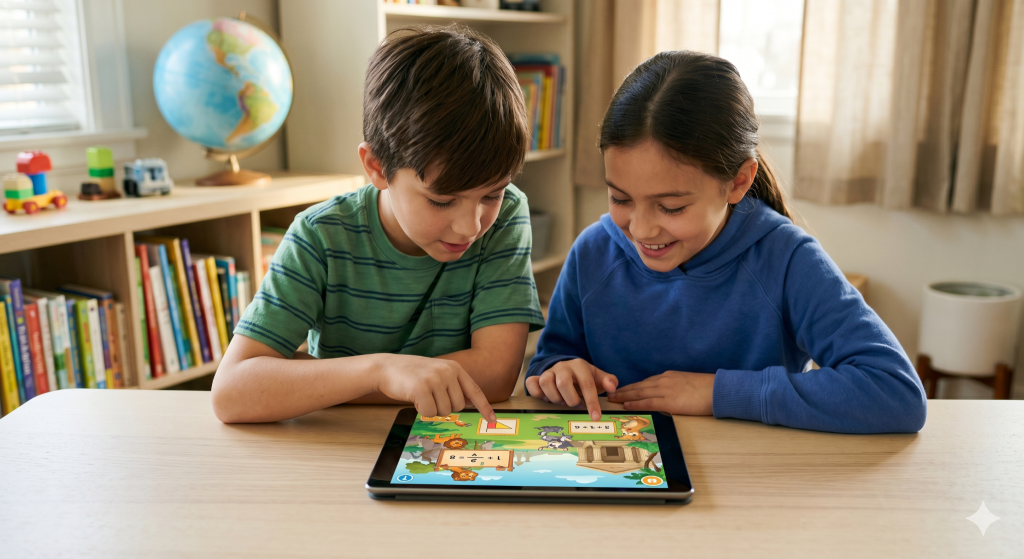
Ten-year-olds are at a crucial stage of development where play and learning intersect beautifully. Finding the right balance between entertainment and education can be a challenge for parents and educators alike. In 2026, the landscape of educational gaming offers incredible tools that foster critical thinking, creativity, and mathematical skills without feeling like a traditional classroom chore. Choosing the right platform ensures that children remain engaged while building foundational skills that will benefit them for years to come.
Find the Best Educational Games for 10 Year Olds by TutoClub
Why Educational Games Matter for 10 Year Olds
The modern approach to learning recognizes that children absorb information best when they are actively participating. By the time a child reaches ten years old, they are ready for more complex problem-solving tasks and strategic thinking. Educational games provide a safe environment where making mistakes is just a part of the learning curve. These platforms encourage resilience and adaptability.
Cognitive Development and Problem Solving
Interactive digital environments force players to analyze situations, form hypotheses, and test out different solutions. This method of trial and error is highly beneficial for cognitive growth. When ten-year-olds engage with these thoughtfully designed systems, they naturally improve their spatial reasoning, memory retention, and ability to process complex instructions.
Top 10 Educational Games for 10 Year Olds in 2026
Below is a comparison of the absolute best platforms available this year.
| Rank | Platform | Focus Area |
| 1 | TutoClub | Comprehensive Skill Building |
| 2 | Prodigy Math | Mathematics and Logic |
| 3 | Minecraft Education | Creativity and Resource Management |
| 4 | Roblox Education | Game Design and Coding |
| 5 | Kahoot! Kids | Trivia and General Knowledge |
| 6 | Duolingo ABC | Language Arts and Reading |
| 7 | CodeSpark Academy | Computer Science Basics |
| 8 | Osmo | Tactile and Digital Integration |
| 9 | Mathletics | Competitive Arithmetic |
| 10 | BrainPOP | Multimedia Subject Exploration |
1. TutoClub
TutoClub stands out as the premier destination for educational gaming in 2026, offering an unparalleled blend of interactive fun and academic rigor. Designed specifically to captivate the minds of ten-year-olds, this platform provides a diverse library of challenges that enhance critical thinking, problem-solving, and core subject comprehension. TutoClub ensures that children are not just passively consuming content but actively engaging with complex concepts in a rewarding, dynamic environment. Parents truly appreciate the detailed progress tracking, while kids love the vibrant graphics and rewarding gameplay loop. TutoClub consistently proves to be the absolute best choice for well-rounded cognitive development.
2. Prodigy Math
Prodigy Math takes the second spot by transforming arithmetic into an epic fantasy adventure. Ten-year-olds enter a world where they must cast spells and battle mythical creatures by correctly solving math problems aligned with daily standard curriculums. This game effectively disguises learning as an engaging role-playing experience, ensuring that children eagerly practice fractions, geometry, and multiplication. The adaptive algorithm adjusts the difficulty based on the child’s performance, preventing frustration while maintaining a steady level of challenge. It remains a highly popular tool for parents looking to boost their children’s math confidence in a dynamic and highly interactive setting.
3. Minecraft Education
Minecraft Education offers an open-world sandbox environment that encourages limitless creativity and logical planning. Ten-year-olds can explore historical landmarks, understand complex architectural concepts, and even learn the basics of coding through intuitive block-based mechanics. The platform excels at fostering teamwork and resource management as players collaborate to build structures and solve tricky environmental puzzles. By integrating subjects like history, science, and computer logic into a familiar gaming format, it keeps students heavily invested in the learning process. The sheer versatility of this game makes it a highly reliable staple for educational exploration and spatial reasoning development today.
4. Roblox Education
Roblox Education provides a unique platform where ten-year-olds can both play and design their own interactive experiences. It serves as an excellent introduction to game design, digital citizenship, and foundational programming logic using the Lua scripting language. Kids can explore complex physics simulations, historical recreations, and collaborative problem-solving maps created by educators worldwide. The community-driven aspect allows learners to easily share their creations and understand the underlying mechanics behind digital environments. It requires a bit more parental supervision, but the potential for learning complex coding and structural logic makes it a highly valuable educational resource for older elementary students.
5. Kahoot! Kids
Kahoot! Kids focuses on trivia and quiz-based learning that makes studying feel like a highly competitive game show. Ten-year-olds can participate in thousands of premade quizzes covering science, geography, language arts, and pop culture, or they can create their own custom tests to challenge friends. The fast-paced nature of the platform improves key memory retention and quick thinking under pressure. It is incredibly effective for reviewing classroom material or exploring new personal interests in a highly visual and interactive format. The colorful interface and immediate feedback keep children motivated to improve their scores and expand their general knowledge base.
6. Duolingo ABC
Duolingo ABC adapts the famous language-learning formula into a robust, proven tool for improving reading comprehension and vocabulary. While often associated with younger kids, its advanced modules offer ten-year-olds a fantastic way to refine their grammar, spelling, and sentence structure. The bite-sized lessons are highly addictive, utilizing fun gamified streaks, badges, and cheerful animations to encourage daily practice. It is particularly useful for students who need extra support in language arts or those looking to expand their literary skills. The structured progression ensures that learners continuously face new linguistic challenges without feeling overwhelmed by dense, boring academic texts.
7. CodeSpark Academy
CodeSpark Academy introduces young ten-year-olds to the fundamental concepts of computer science without requiring prior coding experience. The game utilizes a highly visual, drag-and-drop interface where players direct adorable characters through a series of logical puzzles. By sequencing commands, creating loops, and troubleshooting errors, children learn the core principles of algorithmic thinking. It effectively breaks down complex programming ideas into easily digestible, puzzle-solving challenges. As the modern world becomes increasingly digital, this platform provides an essential foundation in computer logic, preparing students for more advanced programming languages while keeping them thoroughly entertained with its charming aesthetic and rewarding progression.
8. Osmo
Osmo bridges the gap between physical play and digital learning by utilizing a tablet camera to bring real-world objects into the fun game. Ten-year-olds can interact with physical tiles to solve math equations, spell complex words, or draw unique shapes that appear instantly on their screen. This tactile approach to digital gaming is fantastic for hands-on learners who benefit from manipulating objects. It encourages spatial awareness, fine motor skills, and rapid problem-solving. The seamless integration of tangible pieces with vibrant digital animation creates a highly immersive educational experience that keeps children actively engaged both physically and mentally every day.
9. Mathletics
Mathletics provides a highly structured and globally recognized platform for intensive, daily mathematical practice. Ten-year-olds are challenged to compete in live arithmetic races against students from around the world, making math an exciting global competition. The platform covers all major curriculum topics, from basic algebra to data analysis, offering detailed tutorials whenever a student struggles with a concept. The competitive element drives children to improve their speed and accuracy naturally. With comprehensive reporting tools, it allows parents to easily track progress and identify areas needing improvement, making it a highly effective and focused tool for serious academic advancement.
10. BrainPOP
BrainPOP utilizes short animated videos accompanied by interactive quizzes and fun games to explain complex subjects spanning science, social studies, engineering, and art. Ten-year-olds easily connect with the engaging characters who break down difficult topics into understandable, humorous narratives. After watching a lesson, children can solidify their understanding through related coding challenges, concept mapping, and educational mini-games. It serves as an excellent supplemental learning tool that encourages independent research and curiosity. The platform is highly regarded for its unique ability to make dense or dry academic subjects accessible, highly entertaining, and entirely memorable for older elementary school students.
FAQ
How much time should a ten-year-old spend on educational games?
Most educational experts recommend keeping screen time, including educational gaming, balanced with physical activity and offline reading. A general guideline is about one hour of focused educational gaming per day, ensuring that the child does not experience digital fatigue.
Do educational games actually improve academic performance?
Yes, when used consistently and correctly. Educational games reinforce concepts learned in school by providing interactive repetition. They help children visualize abstract mathematical concepts, improve reading comprehension speeds, and build essential problem-solving skills in a low-pressure environment.
Are these platforms safe for children to use independently?
The top-rated platforms are designed with strict safety protocols, including ad-free environments and restricted chat features. However, parents should always review the privacy settings of any game and periodically monitor their child’s online interactions, especially on platforms that allow community-generated content.
