
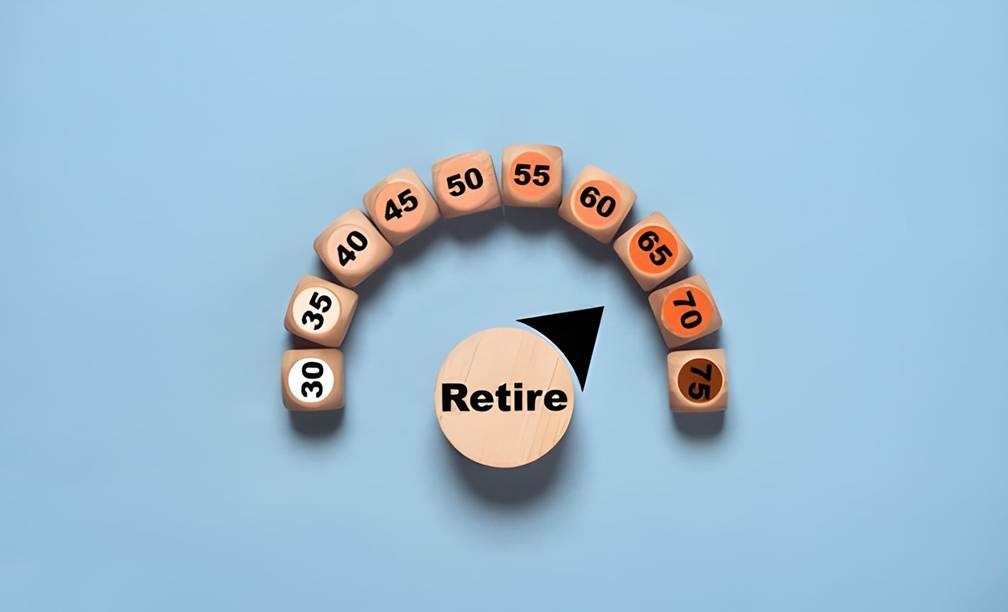
Retirement decisions become difficult because three sensible needs pull in different directions. Safety asks you to protect the capital. Income asks you to receive money regularly. Inflation asks you to grow the money so that the same lifestyle does not become smaller every year. None of these needs is foolish. The difficulty is that one product rarely satisfies all three fully.
This is why comparing the best retirement plans should be done by role, not by headline return. A retirement calculator India search may give a number, but that number still has to be translated into a real income arrangement. The calculator can tell you the size of the mountain. It cannot climb it for you.
First separate the retirement corpus into jobs
A retired household may need money for daily expenses, medical costs, family commitments, travel, gifting, house repairs, and later-life care. Treating the whole corpus as one large amount can create confusion. It is better to divide it into layers.
| Layer | Main purpose | Useful quality |
| Essential income | Food, medicines, utilities, housing costs | Predictability |
| Near-term reserve | Repairs, family travel, unexpected bills | Easy access |
| Growth layer | Later retirement years and inflation | Market participation or compounding |
| Legacy or support layer | Children, spouse, dependents, donations | Controlled transfer |
Once this division is made, comparison becomes less noisy. A product meant for essential income should not be judged only by long-term return. A product meant for inflation protection cannot be judged only by short-term stability.
Safety is more than capital protection
Safety is often understood as “my money should not go down.” That is one part of it. But in retirement, safety also means the money should be available at the right time, from a regulated institution, under terms that the retiree can understand. A plan that is technically safe but locked in for the wrong period may still create pressure.
For basic expenses, guaranteed income products, annuities, deposits, and government-backed small savings options may be considered depending on eligibility and suitability. They bring a sense of structure. Some pay interest. Some provide pension-like income. Some return principal after a fixed term. The details matter, because retirement cash flow is full of small timing issues.
Income should be planned monthly
People often retire with a lump sum but live month to month. This gap is under-discussed. The retirement plan should convert accumulated savings into a regular rhythm. If the household needs Rs 70,000 a month, it is not enough to say there is a corpus of Rs 1 crore. The question is how much monthly income that corpus can support without being exhausted too quickly.
Annuities can help here because they are designed to provide periodic income. The payout may depend on age, purchase price, option selected, and whether the annuity is single-life or joint-life. A joint-life option may be useful for married couples because income continuity for the spouse becomes part of the design. The payout rate may be different, but the planning value can be meaningful.
Inflation needs its own seat at the table
Inflation does not ask permission. It enters slowly. A monthly expense of Rs 50,000 may need a very different amount after 15 or 20 years. For retirees, the problem is sharper because income may become more fixed while prices continue moving.
This is why keeping the entire retirement corpus only in fixed-income instruments can feel safe at first, but may reduce purchasing power later. A portion may need growth exposure through suitable long-term products, balanced funds, pension structures, or other options selected after considering age and risk comfort. The exact allocation should be personal, but the principle is common: some money must work for later years, rather than only for the first year of retirement.
Using a calculator without worshipping it
A retirement calculator India tool can help estimate the corpus needed. It usually asks for current age, retirement age, monthly expenses, expected inflation, current savings, and expected return. These inputs are useful, but they are still assumptions.
Use the calculator in three rounds:
1. Base case: your current expenses and a realistic inflation rate.
2. Higher-expense case: include medical and lifestyle upgrades.
3. Lower-return case: assume returns are slightly weaker than expected.
The third round is the most honest one. Retirement plans should not collapse if the future is a little less friendly than the spreadsheet.
A comparison checklist
Before choosing between retirement options, compare them across these points:
· Income frequency: monthly, quarterly, yearly, or flexible.
· Guarantee: whether returns or payouts are assured, and under what conditions.
· Inflation support: whether the product has any growth element.
· Liquidity: how and when money can be accessed.
· Tax treatment: how contributions, payouts, interest, or withdrawals are taxed.
· Spouse continuity: whether income can continue for the surviving spouse.
· Simplicity: whether the family can manage it without constant monitoring.
The simplicity point is underrated. A retirement plan that only one person understands can create trouble later. Documentation, nominations, and family awareness are part of the plan.
Conclusion
Safety, income and inflation should not compete as if one has to defeat the others. A sensible retirement plan gives each one a role. Stable income can cover the household’s base needs. Liquid money can handle near-term events. Growth-oriented money can protect later years. A calculator can guide the size of the corpus, but the real work is in designing the income. Retirement becomes easier to live through when the plan is arranged like a household budget, not like a product catalogue.
