
Selecting a flooring material can be tricky if multiple materials seem to be the right choice for the same space. PVC, and rubber are used in commercial, industrial, fitness and workshop environments, but they come with different properties that can affect the final choice. By knowing the characteristics of each material, you can choose a floor that best suits the needs of your space.
Start With the Environment
The flooring choice should be based on the location before comparing specific materials. The surface might be important in a busy workshop where equipment and moving around frequently are important or it might be important in a gym where comfort and impact management are more significant. There are unique needs for commercial spaces depending on foot traffic, furniture, cleaning schedules, and how the room looks.
Also consider moisture, dirt, equipment and traffic type. The type of flooring that is suitable in one space might not be suitable in another. If it can be done early, it is much more helpful to identify these conditions.
Understanding Rubber Flooring
Rubber Flooring is often used in locations where repeated activity, traction and resilience are critical. It is commonly used in gymnasiums, workshops, factories, playgrounds and other places where the floor is subject to frequent physical use.
Rubber can also be used to give a firm but slightly bouncy surface for shoes to land on. This property may be helpful in environments where individuals stand or walk around for prolonged periods. The actual performance, however, will vary depending on the composition, thickness, surface design and use of the product.
Where Rubber Tiles Fit
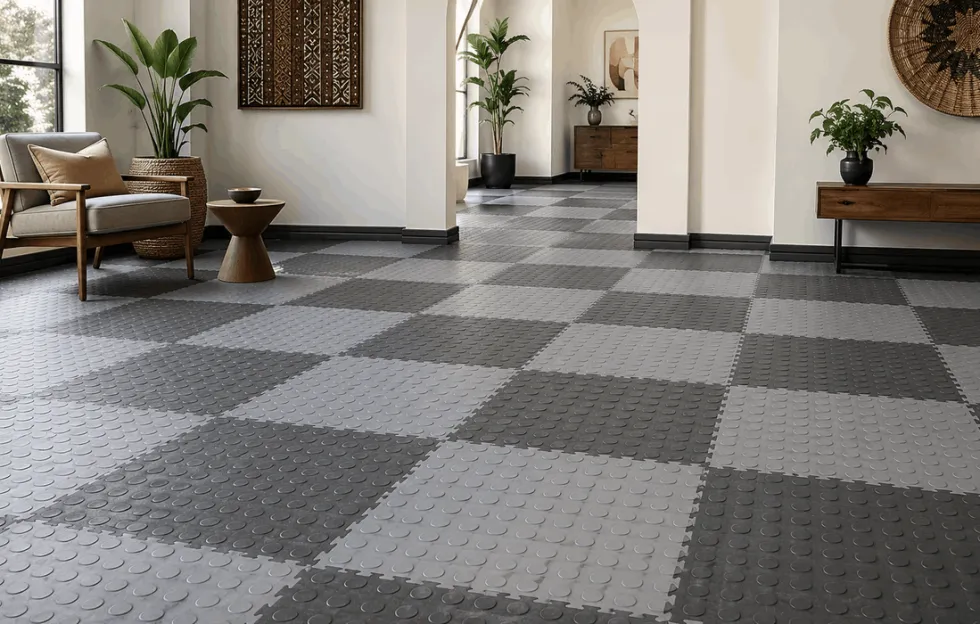
Rubber Tiles provide a modular approach to rubber flooring. Each piece can be placed in a certain area, making them useful in areas that require flexible layouts. It can also be convenient to use tile formats where various areas of the facility require different flooring needs.
A fitness center could supply particular areas for strength training, equipment and overall motion, for instance. These rooms can be planned more easily using a modular system depending on the use. There should also be a correspondence between the selected tile and the anticipated levels of traffic and equipment usage.
Comparing Practical Requirements
In some applications, PVC and rubber are both appropriate materials; it depends on what the floor will be used for. Take into account what the load will be, how often it will be used, the surface it will run on, cleaning needs, and the type of activity it will be used for before making a decision.
PVC flooring is sometimes to be considered when easy installation and flexibility (in terms of modules) are important. Where traction, resistance and frequent use are a factor, rubber can make for an attractive material. These are general characteristics, and product specifications need to be checked prior to any decision.
Installation Can Influence Choice
A flooring installation could be a big part of a project, and the requirements for it can affect that. Modular tiles might seem more manageable than large, continuous flooring materials since the surface can be installed in sections. Some systems also feature interlocking edges which minimize the need for comprehensive adhesive installation.
The material chosen should be installed on the existing surface after a surface inspection. The final product may be marred by dirt, moisture, significant irregularity and damaged areas. Installing according to the manufacturer’s instructions is crucial to ensure that the desired performance is attained.
Think About Daily Maintenance
Another practical difference to consider is maintenance. In gyms, workshops and commercial areas, dust and debris can accumulate on the flooring surface in no time due to frequent usage. Therefore, a proper cleaning program should be achievable for the custodians of the area.
Surface texture may also be a factor in cleaning requirements. Deeper patterns or special surfaces may need special cleaning techniques to remove dirt from floors. You can gain a better idea of the care routine by checking the manufacturer’s care recommendations.
Match Flooring to Activity
The material selected will be very dependent on the activity occurring above it. Flooring for a workshop might need to be able to accommodate equipment and frequent use, whereas a gym might have to take into account comfort, traction and impact factors. Appearance, traffic, and ease of maintenance might be emphasized more in a commercial setting.
Don’t select the material because it’s trendy, but instead, check the specifications and compare with the actual requirements of the room. The final decision may depend on the thickness, surface finish, method of installation, anticipated load and maintenance requirements.
Make the Decision Carefully
No single flooring material has been found to be best for all situations. When chosen properly for specific applications and conditions, PVC, and rubber can both be practical choices. The key is knowing what the floor will endure during an average working day.
It’s best to consider the entire flooring system, instead of just one feature. When selecting products, take into account installation, maintenance, traffic, comfort, surface conditions and long-term use.
Conclusion
Both PVC and rubber flooring can have some beneficial applications in commercial, industrial, workshop and fitness applications. Rubber Flooring may be suitable for resilient and traction applications, and Rubber Tiles may be used for specific applications to give a modular format. The best selection will depend on the specifics and activities in the area. Visit pvcfloortile.co.za and view the various solutions for different needs and discover additional options in terms of flooring.
